
Physics-based modeling and simulation of crushers and mills using commercial software
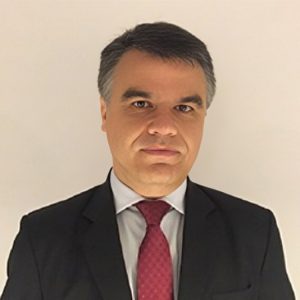
Luís Marcelo Tavares
Brief bio
Tavares is Professor at the Department of Metallurgical and Materials Engineering at the Federal University of Rio de Janeiro (UFRJ). He has a bachelor’s degree in mining engineering, an MSc degree in metallurgical engineering (Federal University of Rio Grande do Sul) and PhD degree in extractive metallurgy (University of Utah), under the late Prof. R.P. King. He founded the Laboratory of Minerals Technology at UFRJ, recognized as the leader in South America in the field of comminution. He co-founded the Global Comminution Collaborative, a not-for-profit association based in Germany and was its first president in 2020. He is well known for the development of several mathematical models of unit operations in mineral processing, with a highlight to the Tavares Breakage Model, available in leading DEM software. He has supervised over 60 MSc and PhD students, received several national and international awards, published over 190 peer-reviewed papers in international journals and was the principal investigator of over 200 industry R&D and technology transfer projects. His publications resulted in over 7500 citations (Scopus), being listed since 2020 in the top 2% scientist list from Elsevier-Stamford.
Physics-based modeling and simulation of crushers and mills using commercial software
Abstract
Empiricism and even traditional phenomenological models have served well the minerals industry for nearly a century. However, the challenges associated with the demands of metals for the green economy, pressures from society towards greater sustainability as well as from the market, besides the great opportunities that have arisen from the digital revolution, have created the necessary conditions for a new approach to innovation and optimization in the field. Indeed, about 30 years ago advanced simulation techniques, which include computational fluid dynamics (CFD) and the discrete element method (DEM) started their journey in the field, being complemented more recently by others, namely smoothed particle hydrodynamics (SPH), microscale formulations of the population balance model (PBM) and advanced breakage models, just to name a few. The author presents how these techniques, previously only available within some developer groups, have reached mainstream in the field, through commercial as well as open access software. Several examples of application to crushing and grinding processes are presented, including cases in which they have already contributed to making engineering decisions in industry. The importance of proper material characterization and validation is highlighted, being indispensable to guarantee that these techniques grow in their credibility in industry. Nevertheless, the greater accessibility to such software in recent years have resulted in explosive growth in published studies in the field.